Finasteride is a proven and effective hair loss treatment for men – particularly for those showing the early signs of male pattern baldness. It can be taken in oral form as a once-a-day pill or as a topical solution applied directly to the scalp. Here is a comprehensive, expert guide to finasteride medication.
Finasteride can be an excellent hair loss treatment option, especially for men in the early stages of male pattern baldness, where it can slow or even reverse the process.
At The Maitland Clinic we have seen many successful outcomes after prescribing finasteride – and there is a substantial body of medical research to support its efficacy and safety, making it one of only two medically approved medications for hair loss.
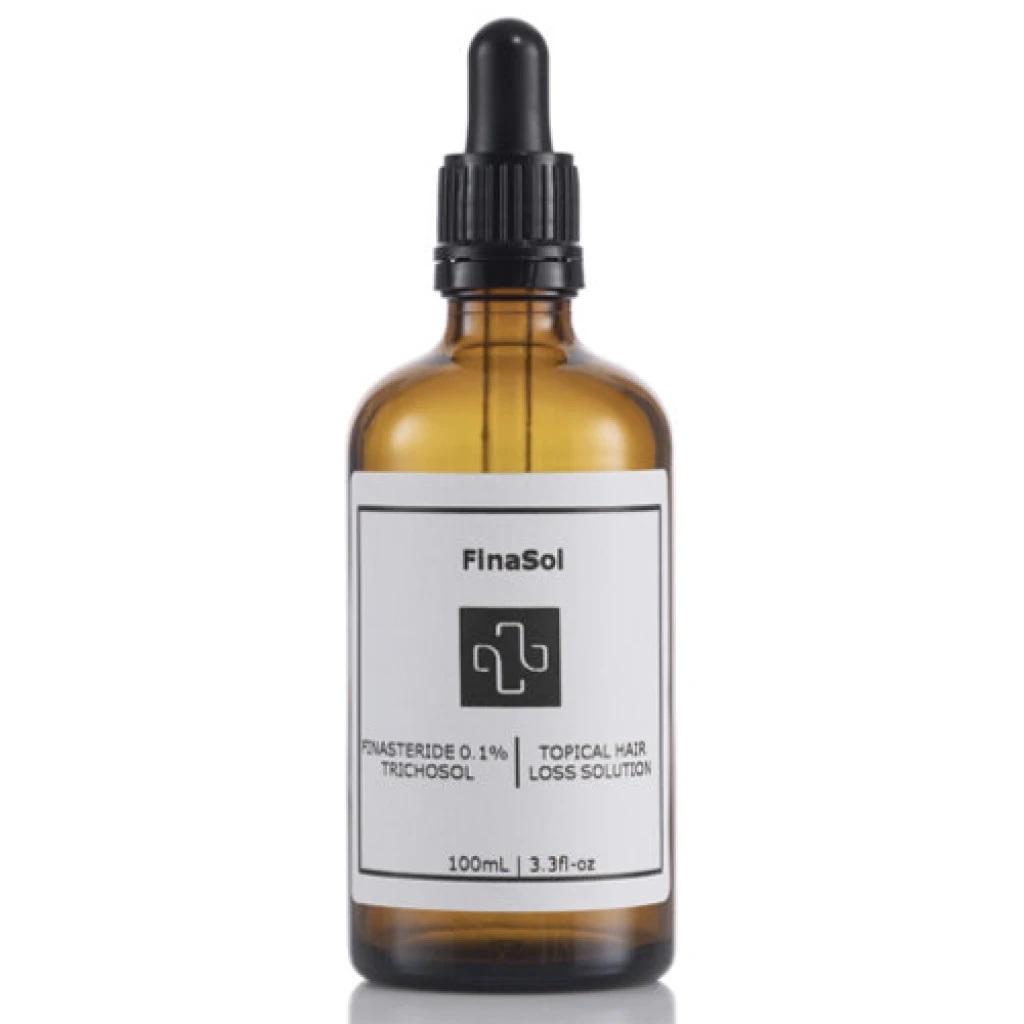
Originally sold under the brand name Propecia, finasteride is most commonly prescribed as a one-a-day pill, often in conjunction with topically-applied minoxidil (the other medically-approved hair loss medication). Finasteride can also now be used in the form of a topical solution itself, which may be more suitable for some men.
As always, it is important to understand the pros and cons, the potential side effects and the likelihood of success before undertaking a course of medication.
The following guide answers the most frequently asked questions about oral and topical finasteride, but every patient is unique and we would always recommend following an accredited online consultation or speaking to a qualified professional about your particular circumstances.
By far the most common form of hair loss is androgenic alopecia, which in men is known as male pattern baldness. As boys reach puberty their levels of testosterone increase, including a testosterone derivative called dihydrotestosterone (DHT). Some men are genetically predisposed to be more sensitive to DHT, with the effect that their hair follicles shrink (‘miniaturise’) so that the hair becomes thinner and eventually unable to grow at all (read more about how hair grows here.)
The predictable visible result is a hair thinning which begins at the temples and then at the crown, leaving a ‘halo’ of hair which eventually recedes until there is full baldness on the top and front of the head (see more about male pattern baldness and the Norwood Scale here).
However, because the miniaturised hair follicles can remain alive for some years, medical treatments can slow or even reverse the effects of hair loss if applied sufficiently early.
Finasteride works by inhibiting the amount of DHT produced in the body, thereby slowing or even reversing the process of hair miniaturisation.
Oral finasteride is taken as a daily 1mg pill. This is the most well-established and proven medication for male pattern baldness.
Topical finasteride is applied directly to the scalp in the form of a solution, foam or gel. This is a relatively new treatment and as such does not have the same body of evidence to support its efficacy, though the studies that do exist are positive and promising (see references below).
Some men may prefer a topical treatment because they suffer from or are worried by potential side effects of taking oral finasteride over a sustained period.
Each patient is unique so you should follow our online consultation or speak to a qualified professional about your particular circumstances when deciding between oral or topical finasteride.
Over the years at the Maitland Clinic we have seen many men enjoy successful results in slowing or reversing the process of male pattern baldness by taking oral finasteride. We tend to see the best results in the crown and mid-scalp areas, but it can also help with frontal recession.
There is a very large body of scientific evidence to support its use in an oral form. Finasteride is a fully licensed UK medication and – along with topical minoxidil – oral finasteride is one of only two medications approved by the US Food and Drug Administration (FDA) and the European Medicines Agency (EMA) for the treatment of androgenetic alopecia.
Numerous studies in men have demonstrated the effectiveness of oral finasteride. One five-year study comparing men taking daily 1mg oral finasteride doses with those on a placebo, found that “90% of finasteride-treated men either maintained (no further visible hair loss from baseline), or sustained visible improvement in, scalp coverage over five years, while 75% of placebo-treated men sustained visible deterioration in scalp coverage.” [1]
A Japanese study of 523 men with androgenetic alopecia conducted over 10 years and published in 2019 found that 90% of the patients using finasteride experienced improvements. [2]
Although there is significantly less evidence for the efficacy of topical finasteride, which is a relatively new treatment, it has been shown in studies to lower the levels of DHT in the scalp.
A 2018 review of seven studies of the use of topical finasteride concluded that “In all studies, there was significant decrease in the rate of hair loss, increase in total and terminal hair counts, and positive hair growth assessment with topical finasteride” and that in patients studied “both scalp and plasma DHT significantly decreased with application of topical finasteride”. [3]
In 2021, a randomised, controlled clinical trial of a topical finasteride spray solution using 458 male patients concluded that “topical finasteride significantly improves hair count compared to placebo and is well tolerated.” [4]
This varies from patient to patient, but if oral finasteride is taken consistently it will reduce DHT in the body within about 6 months. You may begin to see visible improvements in your hair loss as early as this, but most men will notice substantial changes between 12 and 24 months.
It is important to note that finasteride in any form is not a permanent cure for hair loss. Rather, it should be thought of as an effective means for slowing the progression of hair loss during the period in which you are taking the medication. If you cease taking finasteride the effects will be lost, so it should be considered an ongoing, potentially lifelong treatment.
Yes, finasteride is safe and has been proven safe over several decades. Oral finasteride is a fully licensed UK medication that has been tested in multiple medical case studies.
Although there are some reported side effects (see below), these are uncommon.
Some patients notice increased hair shedding at the start of treatment, which can be alarming, but this is a common, short lived side effect and usually settles within 6 weeks.
Otherwise, reported side effects of oral finasteride include decreased libido, erectile dysfunction and ejaculation disorder (decreased volume of ejaculate).
However, in a major 12-month clinical trial of 1mg daily oral finasteride patients, only 3.8% of 945 men reported any of these side effects, compared to 2.1% of 934 men treated with a placebo. [5]
Some patients have reported a condition referred to as ‘post-finasteride syndrome’ and characterized by sexual side effects after taking oral finasteride (low libido, erectile dysfunction, decreased arousal and difficulty in achieving orgasm), depression, anxiety and cognitive complaints. However, these observations are mainly based on self-reporting by the patients and few clinical studies have been performed so far.
The vast majority of patients can take oral finasteride for years without any noticeable side effects, but for patients worried about side effects of oral finasteride, topical finasteride may be a preferable alternative.
Finasteride is the generic name for two approved brand name drugs. Propecia is the original name for the hair loss drug and is available in 1mg oral doses.
Proscar is the brand name for finasteride in 5mg oral doses and is prescribed to treat benign prostatic hyperplasia (BPH) – a common condition in which the prostate becomes enlarged.
Because finasteride works by inhibiting the production of DHT, the cause of male pattern hair loss, it is ineffective for most other forms of hair loss that have different causes. So conditions such as telogen effluvium or alopecia areata will not be effectively treated by it.
Although androgenic alopecia occurs in women (female pattern balding), finasteride is not considered suitable for pre-menopausal women and we do not prescribe it for women at The Maitland Clinic. Some hair loss specialists and dermatologists will prescribe finasteride for female pattern hair loss in post-menopausal women.
However, other non-surgical treatments for female hair loss are available, including minoxidil, platelet-rich plasma (PRP) and low level laser therapy (LLLT).
Oral finasteride is effective when taken on its own, but is generally considered most effective when taken in conjunction with topical minoxidil applied directly to the scalp. Minoxidil helps to increase blood flow to your hair follicles, which appears to increase the effectiveness of finasteride preventing male pattern hair loss.
Conversely, topical finasteride can be taken in conjunction with oral minoxidil. This combination is a newer, less established treatment but may be suitable for some patients.
You should always follow the advice given by your medical professional.
GPs can prescribe 5mg dose finasteride to treat benign prostatic hyperplasia (enlarged prostate). They can also prescribe 1mg doses, which is the medication used for male pattern baldness, but this is not available on NHS prescription. However, you can order topical finasteride through our concierge hair loss treatment services here.
Yes, you can drink alcohol alongside taking finasteride, although it is believed that a healthy lifestyle and avoiding excessive drinking can help the effectiveness of hair loss treatment.
Oral finasteride is a proven, effective medication for reducing and even reversing the process of male pattern baldness. Topical finasteride is a newer treatment but has been demonstrated to be effective and may be more suitable for some men than a daily pill.
The earlier you begin treatment when showing signs of hair thinning, the better the chances of a successful outcome.
However, you should follow our guidance and assessment procedures (online or in person) before taking any treatment, and always read the information provided with the medication.
REFERENCES
1. Finasteride Male Pattern Hair Loss Study Group: Long-term (5-year) multinational experience with Finasteride 1 mg in the treatment of men with androgenetic alopecia. J Eur Dermatol 12:38^49, 2002 -as summarised in Use of finasteride in the treatment of men with androgenetic alopecia (male pattern hair loss) Jerry Shapiro 1, Keith D Kaufman
Source: https://pubmed.ncbi.nlm.nih.gov/12894990/
2. Long-term (10-year) efficacy of finasteride in 523 Japanese men with androgenetic alopecia Masayuki Yanagisawa1-3, Hiroshi Fujimaki2,4, Akira Takeda1,2, Mitsuru Nemoto1, Takayuki Sugimoto and Akio Sat. Published 2019.
3. A Systematic Review of Topical Finasteride in the Treatment of Androgenetic Alopecia in Men and Women. J Drugs Dermatol. 2018 Apr 1; 17(4): 457–463.
Sung Won Lee, MD,1 Margit Juhasz, MD,1 Pezhman Mobasher, MD,1 Chloe Ekelem, MD,1 and Natasha Atanaskova Mesinkovska, MD, PhD1.
Source: National Library of Medicine
4. Efficacy and safety of topical finasteride spray solution for male androgenetic alopecia: a phase III, randomized, controlled clinical trial.
B.M. Piraccini,U. Blume-Peytavi,F. Scarci,J.M. Jansat,M. Falqués,R. Otero,M.L. Tamarit,J. Galván,V. Tebbs,E. Massana, on behalf of the Topical Finasteride Study Group
First published: 11 October 2021
Source: https://doi.org/10.1111/jdv.17738
5. Clinical Studies for PROPECIA (finasteride 1 mg) in the Treatment of Male Pattern Hair Loss

Dr Edward Maitland Ball is a member of the Royal College of Surgeons and a Fellow of the International Society of Hair Restoration Surgery. He is the founder and medical director of The Maitland Clinic.
Subscribe now to keep reading and get access to the full archive.